GutOptim Official Website › Blog › Safety
Black Walnut Hull And The Tree Nut Line On The GutOptim Label
Black walnut hull is the green outer casing of the walnut, and it is the reason the GutOptim panel prints “Contains Tree Nuts (Walnuts)” in bold. Anyone with a tree-nut allergy should not take it. A separate facility sentence names eight more allergens the plant also handles, which is a weaker statement about a shared room.
- The hull is the green casing around the shell, not the kernel, and it is still a tree nut for labelling.
- A PubMed search for hull preparations in people returns nothing that tests a digestive outcome.
- Empty is a finding. It is not the same as mixed, emerging or promising.
- The allergen line is a declaration about an ingredient. The facility line is a statement about a building.
What black walnut hull is, and why it is here
A walnut arrives in layers. Outside is a thick green husk, or hull. Inside that is the hard shell most people picture, and inside that is the kernel you eat. Black walnut, Juglans nigra, is the American species, and its hull is the part on this panel.
The hull has a long history in traditional preparations, in dyeing and in folk remedies, and that history is why it turns up in gut-health formulas. It is printed third in the blend on the Supplement Facts panel, behind psyllium husk and bentonite clay.
It is worth being clear what it is not. It is not a fibre, in the sense the other four plant ingredients here are fibres, and nothing on the label presents it as one.
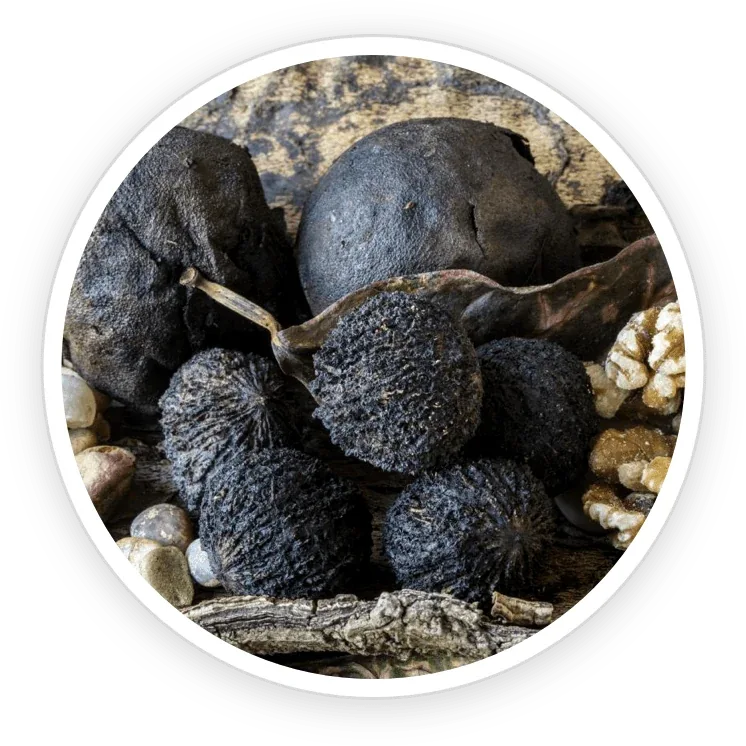
The human trial record is empty
Black walnut hull has no usable human trial record. A PubMed search for hull preparations in people returns compost chemistry, textile dyeing, entomology and a platelet assay, and nothing that tests it in a person for a digestive outcome. The honest statement is that the record is empty — not that the evidence is mixed, and not that it is emerging.
That is an unusual thing to be able to say. Most botanical ingredients have something: a small trial, a poor trial, a trial in the wrong population. Here the searches return work on compost chemistry, on textile dyeing, on insects and a platelet assay, and nothing that tested the hull in a person for anything a buyer would recognise.
The NIH Office of Dietary Supplements supplies the honest register for it: many supplements need more study to determine whether they have value. That is the sentence this ingredient gets on this website, in place of a citation it does not have.
| Name on the panel | What the record looks like |
|---|---|
| Psyllium husk | Deep. Pooled across 16 randomised trials in adults with chronic constipation. |
| Oat bran | Strong for beta-glucan and blood lipids, and not the same evidence as bowel habit. |
| Flaxseed | One good trial, at 20 g a day for 12 weeks. |
| Plum fruit | One good trial, at 100 g a day of whole dried fruit. |
| Bentonite clay | No efficacy trial. The published literature is about heavy-metal contamination. |
| Black walnut hull | Empty. No usable human trial for a digestive outcome. |
Six names, six different kinds of record. The research amounts beside them are grams a day, which is a separate question from whether an ingredient has been studied at all.
Set against the first line of the same blend, the contrast is the point. Psyllium has 16 randomised trials pooled in one meta-analysis, a dose threshold and a time threshold. Black walnut hull has none of those things, and it sits two lines below it on the same label.
An empty record is not a negative one
Empty and negative are different findings and it is worth keeping them apart. A negative record means the ingredient was tested and did not work. An empty record means nobody has published a usable test, so nothing is known either way from human research.
What follows from that is modest. An empty record is not a reason to assume harm, and it is not a reason to assume benefit. It is a reason to price the ingredient at zero when deciding what a bottle is worth to you, and to make the decision on the names that do have records.
It also sets a hard limit on what anyone may claim for it. The Federal Trade Commission’s consumer advice puts the rule in one line: under federal law, no one can promote dietary supplements for the treatment of a disease. The FDA’s structure/function page sets the ceiling from the other side, with its own worked example of a permitted claim, “fiber maintains bowel regularity”, and a reminder that such claims are not pre-approved.
The seller’s page goes further than that in places, including a passage about parasites and the lining of the colon. Those are the seller’s words, they are quoted on the benefits page rather than repeated as claims, and they are not what this desk says the bottle does.
Order GutOptim on the official website
Ten names on the printed panel, the allergen line in bold, and 60 days to change your mind. Free United States shipping on all three packs.
Order GutOptimHow to read an ingredient that has no record
Most panels in this category carry at least one name like this, so the skill generalises. Four questions settle it, and none of them needs a subscription to a journal.
- Is the plant part named? Hull, leaf, root and seed are different materials with different chemistry, and a label that gives only a plant name has told you less than it appears to. This one names the hull, which is the better version.
- Does a human study exist at all? Search the botanical name rather than the marketing name. Laboratory chemistry, agricultural work and insect studies come back first and none of them is a test in a person.
- Is the claim attached to it disease-shaped? An ingredient with no record is where disease language tends to appear, because there is no result to keep the claim in proportion.
- What is it displacing? Names inside a blend share one weight. An ingredient with no record occupies part of that weight, and the ones with records occupy less of it.
The fourth question is the one most people skip, and on this label it is the sharpest. Ten names share 1.5 g a serving. Two of those ten carry the research this category is built on, and the panel’s descending order says only that psyllium leads, not by how far. The ingredients page carries the same reading for all six names the supplier gives.
The allergen line, and what it obliges
Under the allergen line, everything above becomes secondary. The panel prints “Contains Tree Nuts (Walnuts)” directly beneath the Other Ingredients line, in bold, and that sentence is a legal declaration rather than a courtesy.
The FDA’s page on food allergies explains the framework. Tree nuts are one of the major food allergens, walnuts are among the examples the agency gives, and federal law requires the specific nut to be named rather than hidden inside a general phrase. The hull is not the kernel, and for this purpose that distinction does not help: the declaration is made at the level of the nut.
So the reading is simple. If walnuts are on your avoid list, this bottle is on it too, and no amount of interest in the rest of the panel changes that.
If you are allergic to tree nuts, this is not a bottle to try carefully. It is one to skip. An allergen declaration is the one line on a supplement label that admits no judgement call, and a reaction to a tree nut can be severe. Anyone unsure whether a past reaction involved walnuts should settle that with a clinician before, not after.
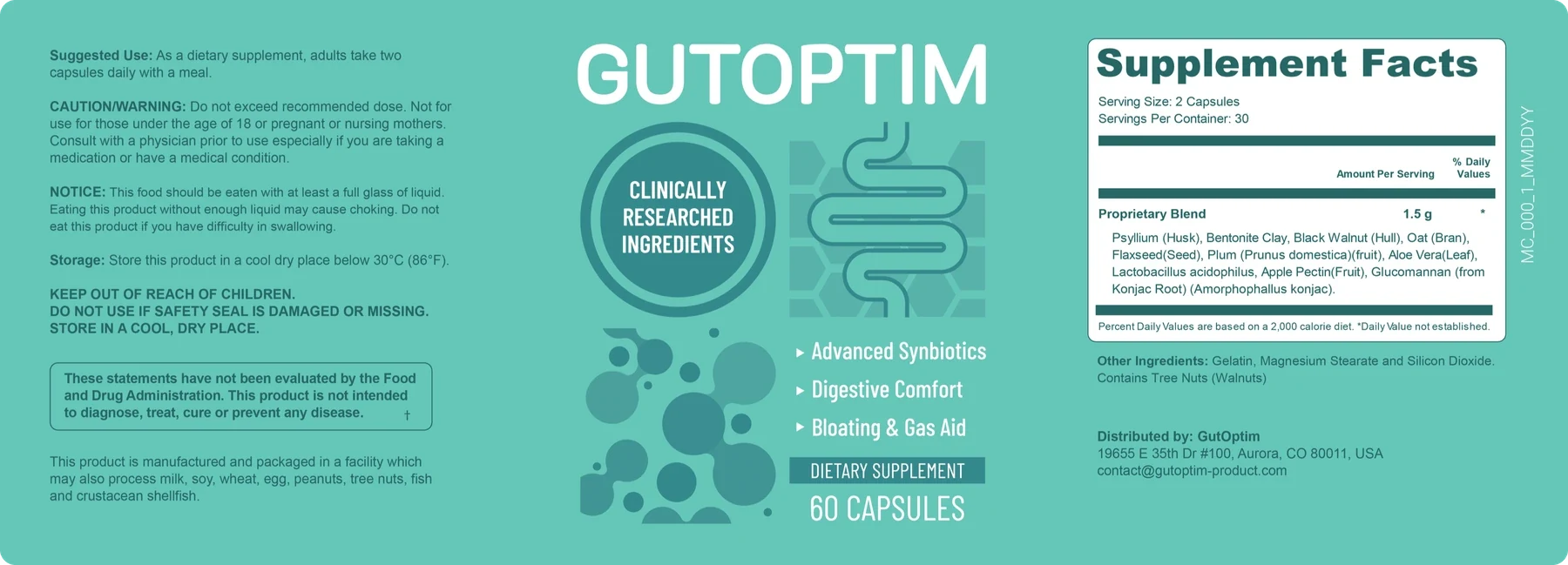
Allergen line against facility line
Two sentences on this label mention allergens and they promise different things. The first is the declaration. The second is the facility statement: “Manufactured and packaged in a facility that may also process milk, soy, wheat, egg, peanuts, tree nuts, fish and crustacean shellfish.”
| The two sentences | What it tells you | What it does not |
|---|---|---|
| “Contains Tree Nuts (Walnuts)” | Walnut is in the product, deliberately, as an ingredient. It is a required declaration about the recipe. | How much of it is in a serving, which the blend total does not split. |
| The facility sentence | The plant also handles milk, soy, wheat, egg, peanuts, tree nuts, fish and crustacean shellfish. | Whether any of those eight is in this product. It describes a building rather than a recipe. |
A facility statement is voluntary. It is a caution about shared equipment, and it is the reason a gluten-free seal on an oat-containing bottle is worth reading twice.
The gluten question follows from the same sentence. Oat bran is naturally free of gluten but is routinely grown, stored and milled alongside wheat, and the facility line here names wheat. Anyone avoiding gluten medically should treat that seal as unconfirmed, which is the reading the testing and quality page gives it.
Who should put this bottle down
Several groups are excluded by the label itself, and the tree-nut line adds one more. Taken together they are narrower limits than the seller’s page suggests.
- Anyone with a tree-nut allergy, on the strength of the declaration on the panel.
- Anyone under 18, on the label’s own caution.
- Anyone pregnant or nursing, on the same caution.
- Anyone who has difficulty swallowing, on the label’s notice about the fibre.
- Anyone on a medication or living with a medical condition, until a physician has looked at the panel with them.
The seller’s page states that the product was “designed for all ages and medical conditions”. The five lines above come off the bottle, and the bottle governs on this website. The who it is for page works through the same list in more detail.
Sources cited in this article
- U.S. Food and Drug Administration. Food Allergies: What You Need to Know. https://www.fda.gov/food/buy-store-serve-safe-food/food-allergies-what-you-need-know
- NIH Office of Dietary Supplements. Dietary Supplements: What You Need to Know. https://ods.od.nih.gov/factsheets/WYNTK-Consumer/
- van der Schoot A, Drysdale C, Whelan K, Dimidi E. The Effect of Fiber Supplementation on Chronic Constipation in Adults: An Updated Systematic Review and Meta-Analysis of Randomized Controlled Trials. Am J Clin Nutr. 2022;116(4):953-969. https://pubmed.ncbi.nlm.nih.gov/35816465/
- Federal Trade Commission, Consumer Advice. Common Health Scams. https://consumer.ftc.gov/articles/common-health-scams
- U.S. Food and Drug Administration. Structure/Function Claims. https://www.fda.gov/food/nutrition-food-labeling-and-critical-foods/structurefunction-claims