GutOptim Official Website › Guides › Gut Health Supplement Guide
The Gut Health Supplement Guide: Fibre, Clay And Bacteria
A gut health supplement is usually one of three things: a fibre, a live bacterium, or a mineral adsorbent, and many are a mix. Fibre works on bulk and transit, bacteria work on the population already there, and clay is sold as an adsorbent. All three are judged over weeks, not days.
The three ingredient families
Fibre
The bulk of this aisle by weight and by evidence. A gel-forming husk and a readily fermented powder behave so differently that treating them as one category is the commonest mistake made about them.
Live bacteria
Probiotics, and synbiotics where a fibre is added to feed them. What matters is which organism, down to the strain, and how many there are at the end of shelf life.
Mineral adsorbents
Clays, usually bentonite. Mined minerals rather than plants or bacteria, and the one family whose literature is about what might be in them.
Most bottles mix at least two of the three. McRorie and McKeown on the physics of functional fibres make the point that matters most: only fibre that resists fermentation and reaches the large bowel intact produces a laxative effect, and some fibres can be constipating.
Not all fibre behaves the same way
The word soluble does most of the damage: psyllium and inulin are both soluble and do almost opposite things.
| Family | Typical names | What it does | Where the evidence sits |
|---|---|---|---|
| Gel-forming viscous fibre | Psyllium husk, oat beta-glucan | Holds water as a gel that resists fermentation | The strongest evidence in the category |
| Non-viscous soluble fibre | Inulin, fructo-oligosaccharide | Dissolves without gelling and ferments readily | Graded insufficient for constipation |
| Insoluble fibre | Wheat bran, coarse plant particles | Adds bulk mechanically | Mixed, and particle size decides much of it |
| Fruit-based | Dried plums, apple pectin | Fibre alongside sorbitol and fruit sugars | Moderate, and one trial beat psyllium |
| Live bacteria | Lactobacillus and Bifidobacterium | Adds organisms to a population already present | Strain-specific, so a genus name tells you little |
| Mineral clay | Bentonite, montmorillonite | Sold as an adsorbent | No efficacy trial worth the name |
Mechanism from McRorie and McKeown 2017; the evidence column from the two reviews cited below.
The fibre evidence, and the intake it was found at
The anchor study for this aisle is a 2022 meta-analysis of fibre supplements in chronic constipation: 16 randomised trials in 1,251 people. It found a benefit over control only above 10 grams of fibre a day, and only in trials of four weeks or more. Psyllium and pectin were the two fibres with a significant effect, and flatulence was more common on fibre than on control.
The graded review of over-the-counter options is the other one to know. Rao and Brenner graded psyllium and prunes at B, moderate evidence, polyethylene glycol and senna at A, inulin and fructo-oligosaccharide at I. Their first-line recommendation is not psyllium.
Then the counterweight: the Cochrane review of bulking agents in irritable bowel syndrome pooled 12 trials and 621 patients and found no benefit over placebo. Constipation and irritable bowel syndrome are different questions.
- Flaxseed. 10 grams twice a day, baked into cookies, for 12 weeks improved constipation symptoms against placebo in 77 adults.
- Dried plums. 50 grams twice a day beat 11 grams of psyllium twice a day on complete spontaneous bowel movements in 40 adults.
- Oat beta-glucan. Thirteen trials in 927 adults lowered LDL by 0.27 mmol/L. Those trials dosed beta-glucan, a fraction of oat bran by weight, so the two are not interchangeable.
What the daily fibre target actually is
The figure a supplement is judged against is not on any supplement label. The NIDDK puts the whole-diet target at 22 to 34 grams of fibre a day for adults, with two conditions dropped more often than the number itself: drink plenty of liquid so the fibre can work, and build the intake up gradually.
The federal health-claim doses sit in the same territory. 21 CFR 101.81 sets the qualifying intakes at 3 grams a day of beta-glucan from whole oats or barley, and 7 grams a day of soluble fibre from psyllium seed husk. The trial built on that dose had 68 adults eat four servings a day for a month, about 8 grams of extra soluble fibre, for a 2.1 per cent fall in total cholesterol — which the authors themselves call relatively small.
So the intakes that moved something are grams a day: 10 for psyllium in constipation, 7 for the federal claim, 3 for beta-glucan, 20 for flaxseed, 100 for dried plums, every one delivered in food or in a measured powder. A capsule can be set beside those figures the moment its panel prints grams, and where a panel gives a blend total instead the comparison cannot honestly be made in either direction.
What a label has to tell you, and what it does not
A Supplement Facts panel must name what is in the product and give a serving size. A proprietary blend lets a maker give one total instead of a figure per ingredient, which is legal and is also the single biggest gap a buyer meets.
The second guide turns that into a checklist.
The NIH Office of Dietary Supplements describes a normal panel as one listing the active ingredients, the amount per serving and the other ingredients. Read it in that order and four things come out in under a minute: how much is a serving, how many servings the bottle holds, how much of each ingredient is in one, and what makes the capsule a capsule.
A blend changes exactly one of those four. The names stay, the total stays, the split disappears. What survives is an arithmetic ceiling: if eight names share 1.5 grams, no one of them is above 1.5 grams. A blend cannot hide the names, the serving size, the allergen statement or the maker’s address.
Two federal facts frame the rest: the FDA has no authority to approve a dietary supplement before it is marketed, and no rule caps the amount of an ingredient in a serving.
Reading the live organisms on a label
A probiotic on a panel should carry three things: a genus, a species and a strain. Lactobacillus is the genus, acidophilus the species, and the strain is the code identifying the organism a trial was run on. NCCIH puts the reason plainly: different types of probiotics may have different effects, and a result for one kind of Lactobacillus is not a result for another.
The second figure is the count: colony forming units, and the date they are guaranteed to. A count at manufacture and a count at the end of shelf life are different promises — and a label naming an organism with neither a strain nor a count has given you a word rather than a dose.
Mineral clays, and the plant extracts that travel with them
Bentonite clay is a mined mineral sold as an adsorbent, and the published literature on swallowing it is not about whether it works. A Dutch survey assayed 63 clays sold for oral use and found lead as high as 99.7 mg/kg and arsenic as high as 45.1 mg/kg. Two of the 27 health clays would take a user past the toxicological limit for lead, and 11 of the 27 past it for inorganic arsenic; the authors conclude that use should be discouraged, particularly in pregnancy. The FDA has separately warned consumers off one such clay over elevated lead, and since its English page no longer resolves, the Spanish-language version is what this desk cites.
Aloe vera travels beside clay more often than anything else, and needs one distinction. NCCIH records that in 2002 the FDA required manufacturers to remove aloe latex from over-the-counter laxative products for lack of safety data, and that aloe products are made from different parts of the leaf: gel, latex or whole crushed leaf. On the gel, three randomised trials in 151 patients found short-term improvement in irritable bowel symptom scores against placebo, at a dose the pooled abstract never publishes.
How long any of this actually takes
Almost every useful trial here ran a month or longer. The constipation meta-analysis found its effect only at four weeks or more, the graded review counted nothing shorter at all, the flaxseed trial ran twelve weeks and the dried plum trial three on each arm.
So the honest expectation for any fibre product is that the first week tells you about tolerance and the first month tells you about effect. That has a commercial consequence too — a guarantee shorter than the evidence window closes before the product has had a fair run.
The four safety points that actually matter in this aisle
Fibre is a benign category, and these points are specific.
- Liquid, every dose. MedlinePlus calls psyllium a bulk-forming laxative and says you must drink at least 8 ounces, 240 millilitres, of liquid with it.
- The swelling warning. The federal rule covering water-soluble gums in over-the-counter drugs, 21 CFR 201.319, names psyllium and glucomannan and requires a warning that taking the product without adequate fluid may cause it to swell and block the throat or oesophagus, and that it should not be taken by anyone with difficulty swallowing. A supplement sits in a different regulatory category, so that is the rule on the ingredient rather than a quotation from any bottle.
- The cause, before the remedy. The National Institute on Aging notes that a range of ordinary medicines can cause constipation, naming antacids containing aluminium or calcium, antihistamines, certain painkillers, blood-pressure medicines and diuretics. If the change started when a prescription did, pull that thread first.
- The allergen line. Botanical blends here routinely include tree nuts, and FDA rules require the specific nut to be declared. Read it before the front of the bottle.
What a gut health label is allowed to claim
There is a line, it is federal, and it is sharper than most labels in this aisle suggest. A supplement may make a structure and function claim, a statement about how an ingredient acts on the body, and the FDA’s own example of one is fiber maintains bowel regularity — which is also the register this whole category should be written in.
What it may not do is claim to treat, cure or prevent a disease, because only a drug can lawfully make that claim. The Federal Trade Commission puts the reader-facing half more bluntly: no one can promote dietary supplements for the treatment of a disease. In advertising the standard is substantiation, and a health claim requires competent and reliable scientific evidence behind it.
What a good label in this category would print
Put the sections above together and a short specification falls out of them. None of it is exotic.
- Grams per serving for every fibre named, not a blend total. It is the figure that lets a reader set a product against a research intake.
- The soluble and insoluble split, because the two do different jobs.
- Genus, species and strain for any organism, with a colony count guaranteed to the end of shelf life, and the capsule shell material named on the Other Ingredients line.
- An allergen statement and a facility statement, kept separate. One is about the recipe, the other about the room.
- A lot number and a route to a certificate of analysis, especially where a mined mineral is on the panel.
That list is the skeleton of the eight-point checklist, which runs the same standard against a real panel.
Sources cited in this guide
- McRorie JW Jr, McKeown NM. Understanding the Physics of Functional Fibers in the Gastrointestinal Tract: An Evidence-Based Approach to Resolving Enduring Misconceptions about Insoluble and Soluble Fiber. J Acad Nutr Diet. 2017;117(2):251-264. https://pubmed.ncbi.nlm.nih.gov/27863994/
- van der Schoot A, Drysdale C, Whelan K, Dimidi E. The Effect of Fiber Supplementation on Chronic Constipation in Adults: An Updated Systematic Review and Meta-Analysis of Randomized Controlled Trials. Am J Clin Nutr. 2022;116(4):953-969. https://pubmed.ncbi.nlm.nih.gov/35816465/
- Rao SSC, Brenner DM. Efficacy and Safety of Over-the-Counter Therapies for Chronic Constipation: An Updated Systematic Review. Am J Gastroenterol. 2021;116(6):1156-1181. https://pubmed.ncbi.nlm.nih.gov/33767108/
- Ruepert L, Quartero AO, de Wit NJ, van der Heijden GJ, Rubin G, Muris JW. Bulking agents, antispasmodics and antidepressants for the treatment of irritable bowel syndrome. Cochrane Database Syst Rev. 2011;2011(8):CD003460. https://pubmed.ncbi.nlm.nih.gov/21833945/
- Jenkins DJ, Kendall CW, Vuksan V, et al. Soluble fiber intake at a dose approved by the US Food and Drug Administration for a claim of health benefits: serum lipid risk factors for cardiovascular disease assessed in a randomized controlled crossover trial. Am J Clin Nutr. 2002;75(5):834-9. https://pubmed.ncbi.nlm.nih.gov/11976156/
- Yu J, Xia J, Yang C, et al. Effects of Oat Beta-Glucan Intake on Lipid Profiles in Hypercholesterolemic Adults: A Systematic Review and Meta-Analysis of Randomized Controlled Trials. Nutrients. 2022;14(10). https://pubmed.ncbi.nlm.nih.gov/35631184/
- Soltanian N, Janghorbani M. Effect of flaxseed or psyllium vs. placebo on management of constipation, weight, glycemia, and lipids: A randomized trial in constipated patients with type 2 diabetes. Clin Nutr ESPEN. 2019;29:41-48. https://pubmed.ncbi.nlm.nih.gov/30661699/
- Attaluri A, Donahoe R, Valestin J, Brown K, Rao SS. Randomised clinical trial: dried plums (prunes) vs. psyllium for constipation. Aliment Pharmacol Ther. 2011;33(7):822-8. https://pubmed.ncbi.nlm.nih.gov/21323688/
- Reeuwijk NM, Klerx WN, Kooijman M, Hoogenboom LA, Rietjens IM, Martena MJ. Levels of lead, arsenic, mercury and cadmium in clays for oral use on the Dutch market and estimation of associated risks. Food Addit Contam Part A Chem Anal Control Expo Risk Assess. 2013;30(9):1535-45. https://pubmed.ncbi.nlm.nih.gov/23862762/
- U.S. Food and Drug Administration. La FDA advierte a los consumidores sobre los riesgos que la arcilla de bentonita de Alikay Naturals, Bentonite Me Baby, conlleva para la salud. (FDA drug safety advisory; the English-language version of this page no longer resolves, so the Spanish version is cited.) https://www.fda.gov/drugs/drug-safety-and-availability/la-fda-advierte-los-consumidores-sobre-los-riesgos-que-la-arcilla-de-bentonita-de-alikay-naturals
- Hong SW, Chun J, Park S, Lee HJ, Im JP, Kim JS. Aloe vera Is Effective and Safe in Short-term Treatment of Irritable Bowel Syndrome: A Systematic Review and Meta-analysis. J Neurogastroenterol Motil. 2018;24(4):528-535. https://pubmed.ncbi.nlm.nih.gov/30153721/
- National Center for Complementary and Integrative Health. Aloe Vera: Usefulness and Safety. https://www.nccih.nih.gov/health/aloe-vera
- National Center for Complementary and Integrative Health. Probiotics: Usefulness and Safety. https://www.nccih.nih.gov/health/probiotics-usefulness-and-safety
- U.S. Food and Drug Administration. Food Allergies: What You Need to Know. https://www.fda.gov/food/buy-store-serve-safe-food/food-allergies-what-you-need-know
- U.S. Code of Federal Regulations. 21 CFR 101.81 - Health claims: Soluble fiber from certain foods and risk of coronary heart disease (CHD). https://www.ecfr.gov/current/title-21/chapter-I/subchapter-B/part-101/subpart-E/section-101.81
- U.S. Code of Federal Regulations. 21 CFR 201.319 - Water-soluble gums, hydrophilic gums, and hydrophilic mucilloids ... as active ingredients; required warnings and directions. https://www.ecfr.gov/current/title-21/chapter-I/subchapter-C/part-201/subpart-G/section-201.319
- MedlinePlus, U.S. National Library of Medicine. Psyllium: MedlinePlus Drug Information. https://medlineplus.gov/druginfo/meds/a601104.html
- National Institute of Diabetes and Digestive and Kidney Diseases. Eating, Diet, & Nutrition for Constipation. https://www.niddk.nih.gov/health-information/digestive-diseases/constipation/eating-diet-nutrition
- National Institute on Aging. Concerned About Constipation? https://www.nia.nih.gov/health/constipation/concerned-about-constipation
- U.S. Food and Drug Administration. Structure/Function Claims. https://www.fda.gov/food/nutrition-food-labeling-and-critical-foods/structurefunction-claims
- U.S. Food and Drug Administration. Questions and Answers on Dietary Supplements. https://www.fda.gov/food/information-consumers-using-dietary-supplements/questions-and-answers-dietary-supplements
- NIH Office of Dietary Supplements. Dietary Supplements: What You Need to Know. https://ods.od.nih.gov/factsheets/WYNTK-Consumer/
- Federal Trade Commission. Health Products Compliance Guidance. https://www.ftc.gov/business-guidance/resources/health-products-compliance-guidance
- Federal Trade Commission, Consumer Advice. Common Health Scams. https://consumer.ftc.gov/articles/common-health-scams
About this guide
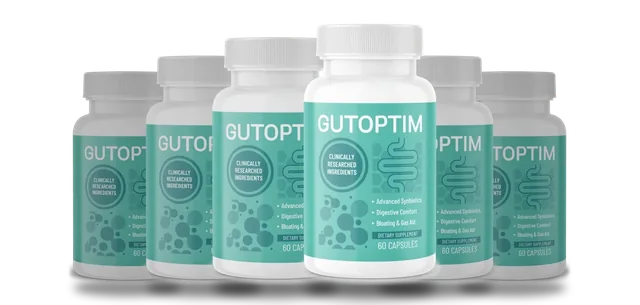
Order GutOptim on the official website
The second guide runs GutOptim through an eight-point checklist line by line, including the four lines it fails.
$49 to $69 a bottle · free US shipping · 60 days to change your mind
Order GutOptim On The Official WebsiteOne-time payment, no subscription · 60-day money-back guarantee · lot GUT-26/GE-5057