GutOptim Official Website › Testing & Quality
GutOptim Testing And Quality
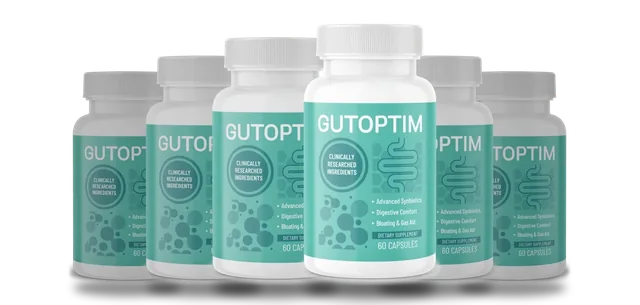
Ten seals travel with GutOptim in the seller’s artwork. One describes an audited process, one is a promise to the buyer, and the rest describe the recipe or the room. The vegetarian seal is the one to read twice: the panel’s Other Ingredients line begins with gelatin, so the capsule shell is not vegetarian.
A seal is a graphic until someone can name who issued it and when. Ten of them travel with this bottle, and three of the ten describe a recipe the printed panel describes differently.
The ten seals on GutOptim, one at a time
Each one below says what it can prove and what it cannot. A seal that cannot be traced to a certificate is a graphic.



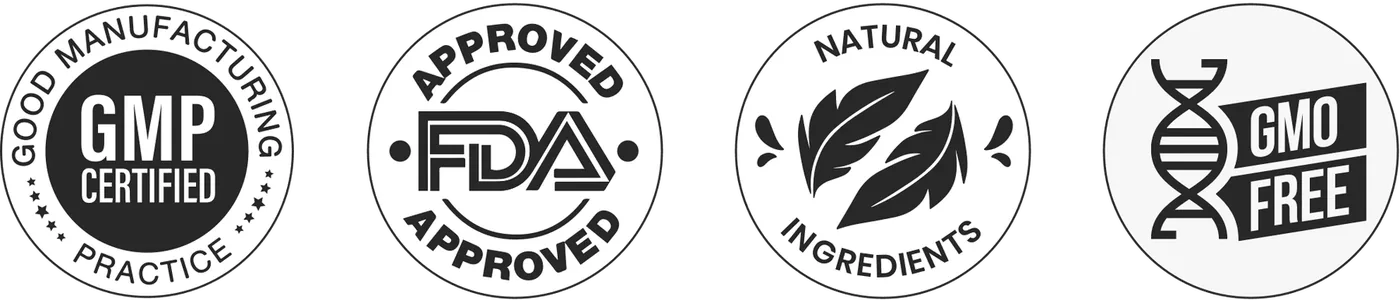
The GutOptim certification strip
Three of the ten describe the recipe in terms the printed panel describes differently. Here they are together.
Vegetarian. The panel’s second list reads gelatin, magnesium stearate, silicon dioxide. Gelatin is an animal product and it is the capsule shell, so a vegetarian buyer is not getting what the seal says. That one is settled by reading the bottle.
Gluten free and dairy free. Nothing on the panel is a wheat ingredient and nothing on it is a dairy ingredient, so both seals describe the recipe accurately. The label’s own facility line then reads: “Manufactured and packaged in a facility that may also process milk, soy, wheat, egg, peanuts, tree nuts, fish and crustacean shellfish.” Wheat and milk are both in that sentence. The seals describe the recipe and the facility line describes the room — and coeliac disease or a milk allergy is a question about the room.
Oat bran sharpens that point rather than softening it. Oats carry no gluten of their own and are routinely grown and milled alongside wheat, which is why an oat product is normally sold either on a purity protocol or with a shared-facility warning. This label carries the warning, and those three readings are the whole of the disagreement.
What “FDA-registered facility” means on GutOptim
Facilities that pack food and supplements for sale in the United States register with the FDA, and the GutOptim artwork carries a seal saying so. Registration is a listing on a government database.
FDA states the limit in its own words: mere registration of an establishment, or listing of a product, “does not denote approval of the establishment” and does not mean a product may be legally marketed.
Nothing in the category is FDA-approved. Under the Dietary Supplement Health and Education Act, FDA does not have the authority to approve dietary supplements before they are marketed — and no law limits the serving size of a supplement or the amount of an ingredient in a serving. Those decisions belong to the manufacturer.
That page also draws the line this website leans on most: FDA is generally responsible for a supplement’s safety, quality and labelling, and the FTC for its advertising. The printed panel is labelling and a product page is advertising — two documents, two standards, two agencies. That is why this desk reads the panel first whenever they differ.
What this desk does not claim about GutOptim
Two lines on the seller’s page say more than the printed label supports. A buyer who has read that page deserves to know which parts of it the bottle does not carry, so both are named here.
“Designed for all ages and medical conditions”
The printed label says the opposite: not for use under the age of 18, not for pregnant or nursing mothers, and consult a physician first if you take a medication or have a medical condition. The bottle governs.
“All of the ingredients have been proven to be safe in clinical trials”
No trial of GutOptim has been published, and the panel prints no amount for any of the ten names, so there is nothing to compare a trial dose against.
The FTC requires health-benefit and safety claims to be substantiated by competent and reliable scientific evidence, and a finished capsule blend that has never been trialled has none of its own to offer. No enforcement action is alleged against anyone here.
So, plainly: this desk does not claim GutOptim has been through a clinical trial, does not hold a third-party assay for the run it ships, and does not claim the capsules treat anything. What it claims is what the label claims, in the label’s own three lines: Advanced Synbiotics, Digestive Comfort and Bloating & Gas Aid.
What a fully documented GutOptim panel would add
| What the panel prints today | What a fully documented version would add |
|---|---|
| Ten ingredient names, in the order the panel prints them | A milligram figure beside each name, so a reader can compare one against the research on it |
| Proprietary Blend 1.5 g per two-capsule serving, Daily Value not established | How that 1.5 g divides across the names. The total is a ceiling: no single ingredient can exceed it |
| Lactobacillus acidophilus, by species | The strain and the live count at the end of shelf life, which is what a probiotic is actually sold on |
| Other Ingredients: gelatin, magnesium stearate, silicon dioxide | Nothing. That line is complete and it is the one that answers the vegetarian question |
| “Contains Tree Nuts (Walnuts)” and the full facility statement | Nothing. Both are printed in full, which is more than many panels in this category manage |
| GMP Certified, as a seal | The certifying body and the date of the audit, so the seal leads to a certificate |
Two of those six rows are already complete — the excipient list and the allergen statement, which carry the most risk for a buyer. The NIH Office of Dietary Supplements calls a Supplement Facts label the place that lists the active ingredients, the amount per serving and the other ingredients.
The probiotic row is the one to weigh hardest. NCCIH is explicit that different types of probiotics have different effects, and that a result for one kind of Lactobacillus does not transfer to another kind. A species name alone is not enough to look up what a strain has been shown to do.
Four questions that settle any GutOptim seal
Who issued it
A certifying body has a name, and an audited process has an auditor. Of the ten seals on this bottle, GMP is the one that implies a third party, and the artwork names none.
When was it issued
Certificates expire. A seal with no date behind it could describe an audit from any year, and a reader has no way to tell which.
Against which standard
Good Manufacturing Practice is a federal requirement for supplement facilities, so the seal reports the plant meeting the rules rather than going past them.
Can you see the certificate
Ask. Order support on +1 (302) 200-3480 will pass on what the supplier holds, and a seal that cannot produce a document behind it is artwork.
Those four questions work on any bottle in this category — apply them to the next gut-health label you pick up and most of the row will fall away. The choosing guide runs the same checklist across a shelf.
How this GutOptim seal audit was done
This desk publishes what the bottle says, in the bottle’s own words, and shows its working where the sources disagree. The four claims below are the ones a sceptical reader can audit in ten minutes, which is the only reason to make them:
- The printed label is the source. The serving, the capsule count, the blend total, the allergen line and the cautions come from the panel on the bottle. Prices, packs and bonuses come from the seller’s own page, read on 18 September 2026, not from a review column.
- Where three sources disagree, all three are printed. The supplier names six ingredients, the seller’s page prints nine and the label panel lists ten. This website states the six, shows the other two lists on the ingredients page, and does not average them.
- Sources are real and linked in the sentence. Every study cited here was confirmed against its PubMed record before it was written down, and every government page was opened and checked by its title rather than assumed.
- Corrections change the date. Write to [email protected] and the review date at the foot of the page moves forward.
We earn when you buy. Getgutoptim is the USA Authorized GutOptim Retailer named at the top of this page, and this website makes money on orders placed through it. That is exactly why the ingredient-count section, the gelatin note under the vegetarian seal and the three-star lines in the review roster are here: they are where our interest and yours pull apart, and you should be able to watch us choose.
Order support on +1 (302) 200-3480 handles tracking, changes, cancellations and refunds. It is not a sales line, and this website never presents it as a way to place an order: orders go through the checkout only.
Each of the ten seals above was read off the seller’s own listing artwork and then checked against the printed Supplement Facts panel and its Other Ingredients line. Where the two describe the bottle differently, the panel is what this desk follows, and the difference is set out on this page rather than mentioned on six.
Sources cited on this GutOptim quality page
- U.S. Food and Drug Administration. Is It Really 'FDA Approved'? https://www.fda.gov/consumers/consumer-updates/it-really-fda-approved
- U.S. Food and Drug Administration. Questions and Answers on Dietary Supplements. https://www.fda.gov/food/information-consumers-using-dietary-supplements/questions-and-answers-dietary-supplements
- NIH Office of Dietary Supplements. Dietary Supplements: What You Need to Know. https://ods.od.nih.gov/factsheets/WYNTK-Consumer/
- National Center for Complementary and Integrative Health. Probiotics: Usefulness and Safety. https://www.nccih.nih.gov/health/probiotics-usefulness-and-safety
- Federal Trade Commission. Health Products Compliance Guidance. https://www.ftc.gov/business-guidance/resources/health-products-compliance-guidance
More about GutOptim
Order GutOptim on the official website
Ten seals, one printed panel, and 60 days to change your mind.
$49 to $69 a bottle · free US shipping · 60 days to change your mind
Order GutOptim On The Official WebsiteOne-time payment, no subscription · 60-day money-back guarantee · lot GUT-26/GE-5057