GutOptim Official Website › How It Works
How Does GutOptim Work?
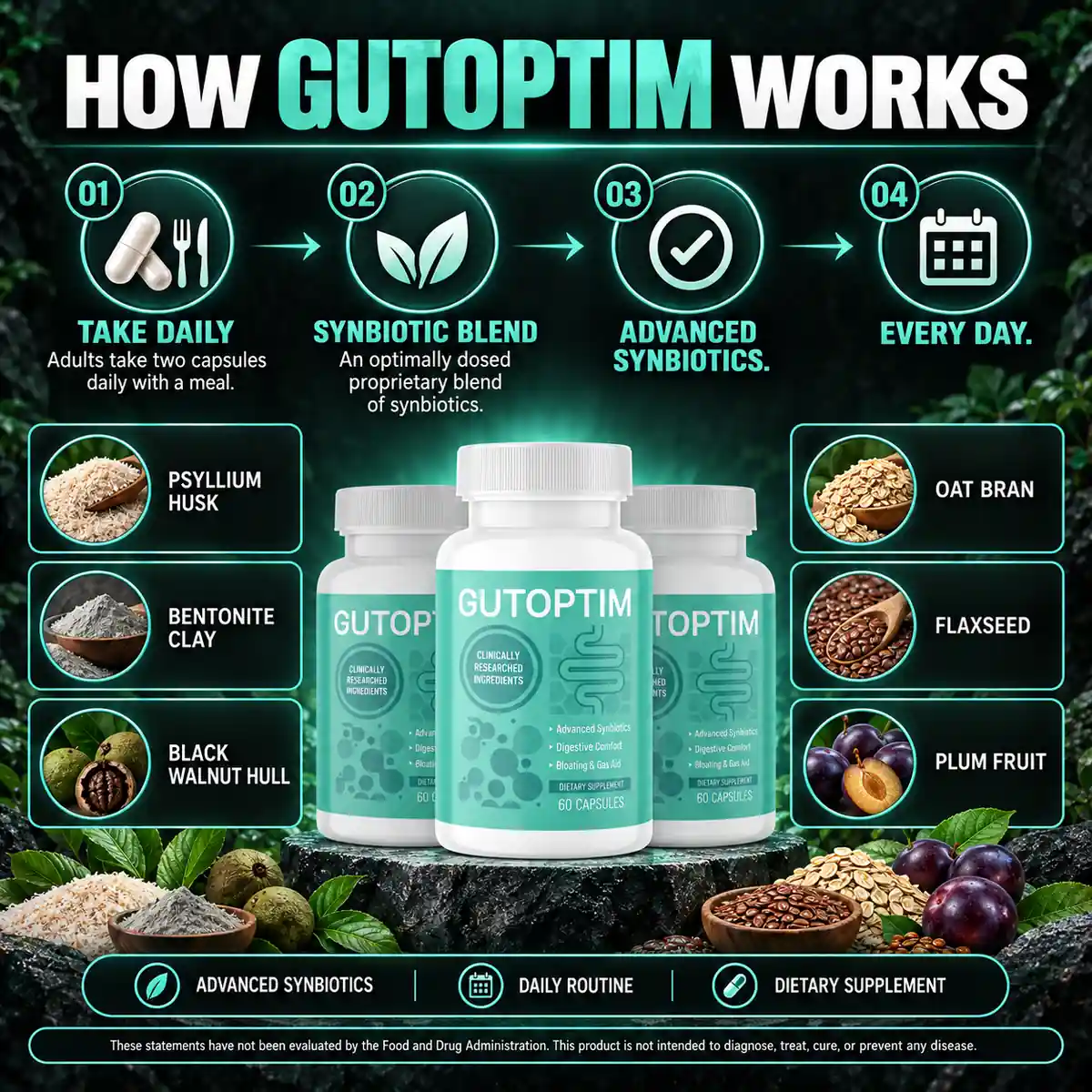
GutOptim works on bulk and transit rather than on a probiotic count. Four of its six named ingredients are fibres, one is a mineral clay and one is a fruit. The label claims Advanced Synbiotics, Digestive Comfort and Bloating & Gas Aid, and those three lines are the ceiling on anything said here.
The three things GutOptim is built to do
Three pathways, in the order they happen after a capsule is swallowed.
Water is taken up and a gel forms
Psyllium, glucomannan and the beta-glucan in oat bran are viscous fibres. In liquid they swell into a gel rather than dissolving away, which is why the bottle asks for a full glass. The mechanism review behind this distinction is blunt that viscosity, not the word soluble, is what decides the behaviour.
Bulk reaches the large bowel intact
A gel-forming fibre only changes stool if it survives fermentation on the way down. The fibres that gut bacteria eat first are largely gone by the time they reach the colon, and the same review notes that some fibres can firm stool rather than soften it. Psyllium is on the list that gets through.
The clay and the bacterium travel alongside
Bentonite clay is a mined mineral sold as an adsorbent, which means it binds material to its surface rather than dissolving it. Lactobacillus acidophilus is the probiotic half of the synbiotic line on the front of the bottle. Neither is a fibre, and neither is what the bulk effect rests on.
Put together, that is a bulk-and-transit product rather than a bacterial one, and the three lines on the front of the bottle describe it in those terms. What a label of this kind may say about any of it is set by the federal rule on structure and function claims, and is worked through on the benefits page.
Nothing about that mechanism is exotic — fibre takes up water, water softens and adds weight, and weight moves. The reason the label asks for a meal and a full glass is that both steps need the liquid to happen at all.
What Advanced Synbiotics means on a GutOptim label
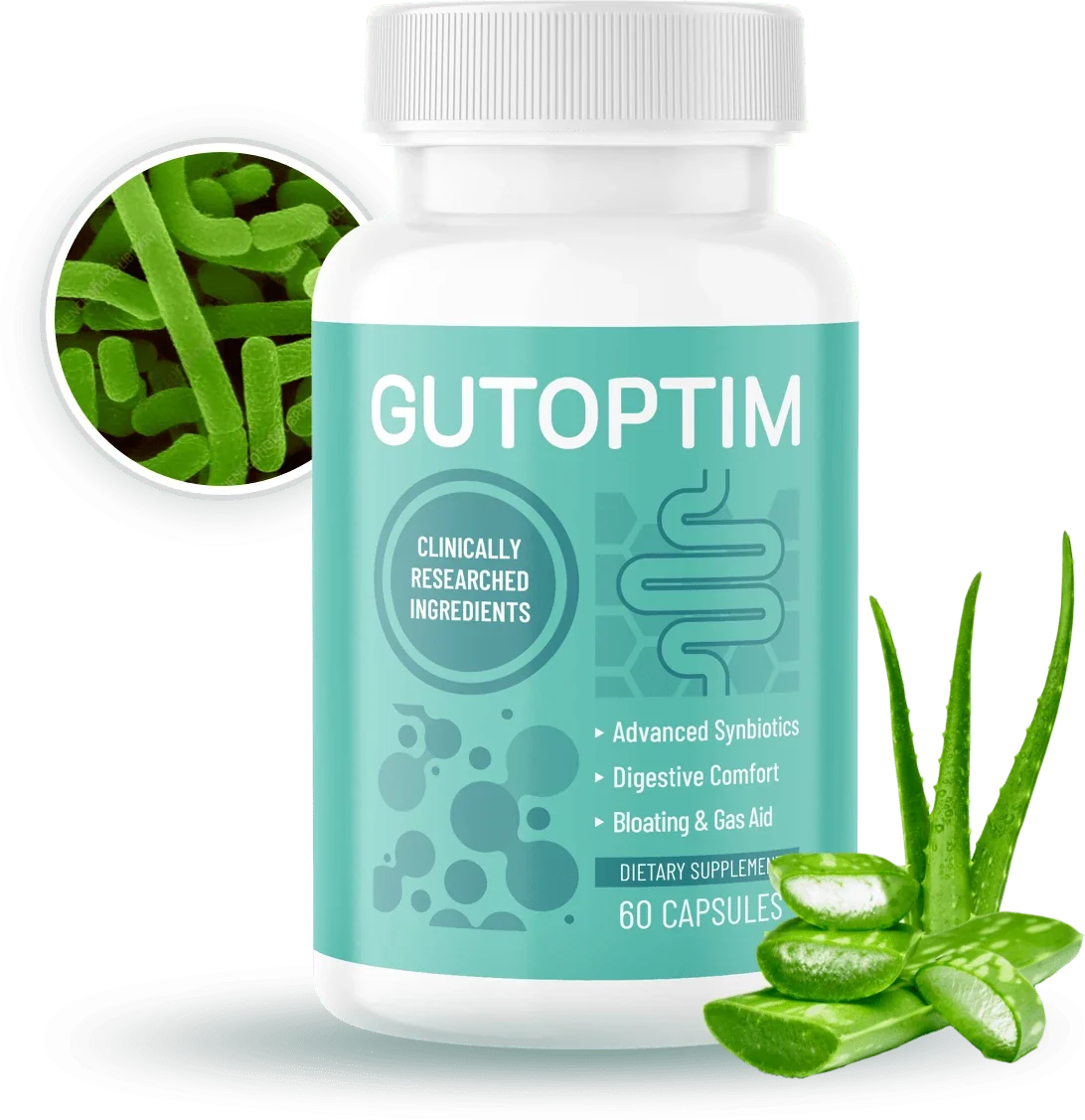
A synbiotic is a probiotic and the fibre that feeds it, sold together. The printed panel carries one bacterium and several fibres, so the word fits what is on the bottle even though the supplier’s own list of six does not include the bacterium.
The interesting part is that the two halves ask fibre for opposite things. A fibre that feeds bacteria is one they can ferment, and fermentation is exactly what removes a fibre before it reaches the large bowel. A fibre that supports regularity is one that resists fermentation and arrives intact. A panel with several fibres on it can plausibly do both jobs — but no single fibre does both at once, and a blend total does not say which of them is carrying which job.
What a synbiotic claim does not settle is the bacterial half. The panel names Lactobacillus acidophilus with no strain and no CFU count, and the strain is the part that carries the evidence. Why that distinction matters is set out beside the other three names the panel adds on the ingredients page.
What happens after the first GutOptim capsule
The gelatin shell opens in the stomach and the powder meets whatever liquid is there. That is the whole of the first hour, and it is why the consumer monograph for psyllium asks for at least 8 ounces, 240 millilitres, of liquid with every dose. Without it the powder still swells — it simply does so with less water than it wants.
From there the timescale is the gut’s, not the capsule’s. Material takes most of a day to cross the small bowel and considerably longer to cross the large one, so the first serving reaches the place it acts on well after it was swallowed. There is nothing to feel in the first hour and nothing to judge in the first day.
Over a longer run the trial evidence sets the honest window. The constipation meta-analysis only found a difference in trials that ran four weeks or more, and the graded review of over-the-counter options counted nothing shorter than four weeks. Four to eight weeks is the band this desk records, and the timeline page sets it against its own order record.
The seller’s own GutOptim mechanism panel
How GutOptim is dosed, and what the panel settles
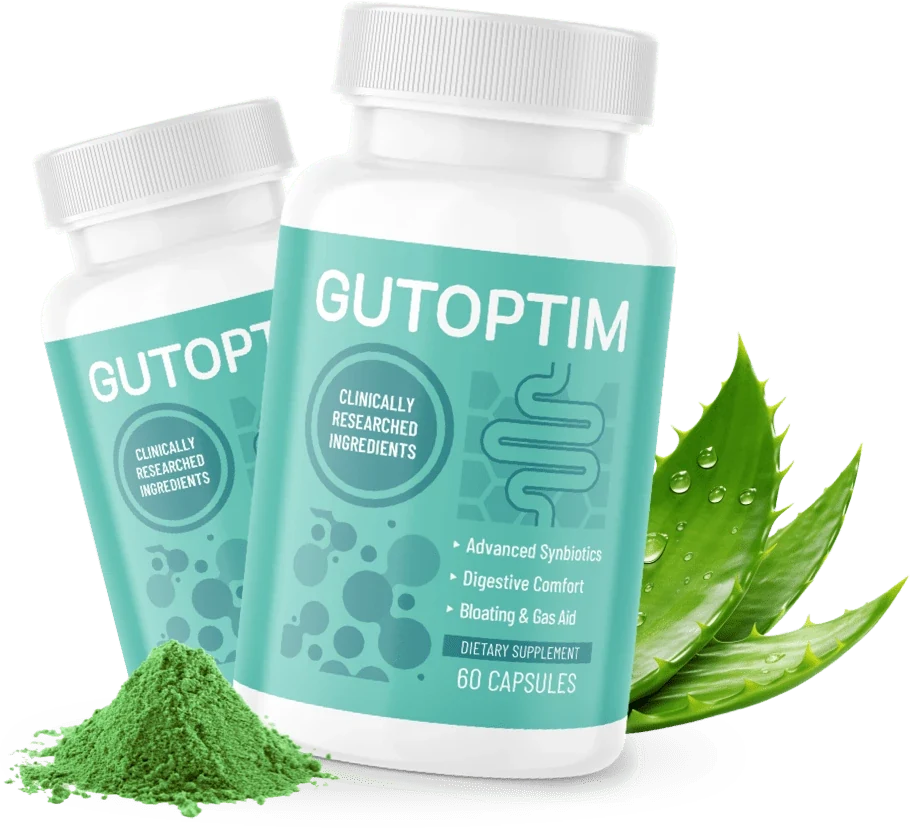
Start with what is published. Two capsules a day carry 1.5 g of blend between them, the Daily Value is not established, and that single figure is a ceiling — no one name on the panel can be present at more than the whole. That is the number to measure everything else against, and it is the number the rest of this section uses.
Setting a serving size is the manufacturer’s decision and nobody else’s. FDA states plainly that no law or regulation limits the serving size of a supplement or the amount of a dietary ingredient in a serving. So the comparison worth making is not against a rule. It is against what the research actually used, divided by the serving the label itself prints.
| Ingredient and outcome | What the research used, a day | What that would mean for one capsule |
|---|---|---|
| Psyllium husk, for constipation | above 10 g a day, sustained for four weeks or more | Split across a two-capsule serving, one capsule would have to hold 5 g of psyllium on its own, before any of the other five ingredients. |
| Psyllium husk, FDA health-claim dose | 7 g a day of soluble fibre from psyllium seed husk | That is 3.5 g in each capsule, of psyllium alone. |
| Oat beta-glucan, FDA health-claim dose | 3 g a day of beta-glucan from whole oats or barley | That is 1.5 g of pure beta-glucan in each capsule, before any of the oat bran that carries it. |
| Flaxseed, for constipation | 20 g a day, 10 g twice daily, over 12 weeks | That is 10 g of flaxseed in each capsule. |
| Dried plums, for constipation | 100 g a day, 50 g twice daily, over three weeks | That is 50 g of dried plum in each capsule. The trial fed whole dried fruit by the handful. |
| Dietary fibre, whole-diet target | 22 to 34 g a day, from food | That is 11 to 17 g in each capsule, and it is a target for a diet rather than for a supplement. |
Each right-hand figure is the trial dose divided by two, because a serving is two capsules. It rests on the published dose and the printed serving size, and on nothing else.
The federal health claim for soluble fibre sets its own bar: 3 g a day of beta-glucan from whole oats or barley, or 7 g a day of soluble fibre from psyllium seed husk. The trial that tested that dose took four servings a day to reach it and reported a 2.1 per cent fall in total cholesterol, which its own authors called small. GutOptim makes no health claim of that kind on its label, and the panel prints no soluble fibre figure to test against one.
The research behind psyllium and oat beta-glucan is genuinely strong, and it was done at grams a day. Two capsules are a supplement to a fibre-adequate diet, not a substitute for one. A fibre-adequate diet is 22 to 34 g a day from food, and that is the target the capsules sit beside rather than replace.
How this GutOptim page was written
This desk publishes what the bottle says, in the bottle’s own words, and shows its working where the sources disagree. The four claims below are the ones a sceptical reader can audit in ten minutes, which is the only reason to make them:
- The printed label is the source. The serving, the capsule count, the blend total, the allergen line and the cautions come from the panel on the bottle. Prices, packs and bonuses come from the seller’s own page, read on 18 September 2026, not from a review column.
- Where three sources disagree, all three are printed. The supplier names six ingredients, the seller’s page prints nine and the label panel lists ten. This website states the six, shows the other two lists on the ingredients page, and does not average them.
- Sources are real and linked in the sentence. Every study cited here was confirmed against its PubMed record before it was written down, and every government page was opened and checked by its title rather than assumed.
- Corrections change the date. Write to [email protected] and the review date at the foot of the page moves forward.
We earn when you buy. Getgutoptim is the USA Authorized GutOptim Retailer named at the top of this page, and this website makes money on orders placed through it. That is exactly why the ingredient-count section, the gelatin note under the vegetarian seal and the three-star lines in the review roster are here: they are where our interest and yours pull apart, and you should be able to watch us choose.
Order support on +1 (302) 200-3480 handles tracking, changes, cancellations and refunds. It is not a sales line, and this website never presents it as a way to place an order: orders go through the checkout only.
One page-specific note. Every figure in the dose table above is either a published trial dose or that dose divided by two. Nothing here rests on an estimate of how much powder a capsule holds, because the label states neither the capsule size nor the fill weight, and a figure this desk cannot source is a figure it does not print.
Sources cited on this GutOptim mechanism page
- McRorie JW Jr, McKeown NM. Understanding the Physics of Functional Fibers in the Gastrointestinal Tract: An Evidence-Based Approach to Resolving Enduring Misconceptions about Insoluble and Soluble Fiber. J Acad Nutr Diet. 2017;117(2):251-264. https://pubmed.ncbi.nlm.nih.gov/27863994/
- van der Schoot A, Drysdale C, Whelan K, Dimidi E. The Effect of Fiber Supplementation on Chronic Constipation in Adults: An Updated Systematic Review and Meta-Analysis of Randomized Controlled Trials. Am J Clin Nutr. 2022;116(4):953-969. https://pubmed.ncbi.nlm.nih.gov/35816465/
- Rao SSC, Brenner DM. Efficacy and Safety of Over-the-Counter Therapies for Chronic Constipation: An Updated Systematic Review. Am J Gastroenterol. 2021;116(6):1156-1181. https://pubmed.ncbi.nlm.nih.gov/33767108/
- U.S. Code of Federal Regulations. 21 CFR 101.81 - Health claims: Soluble fiber from certain foods and risk of coronary heart disease (CHD). https://www.ecfr.gov/current/title-21/chapter-I/subchapter-B/part-101/subpart-E/section-101.81
- Jenkins DJ, Kendall CW, Vuksan V, et al. Soluble fiber intake at a dose approved by the US Food and Drug Administration for a claim of health benefits: serum lipid risk factors for cardiovascular disease assessed in a randomized controlled crossover trial. Am J Clin Nutr. 2002;75(5):834-9. https://pubmed.ncbi.nlm.nih.gov/11976156/
- Soltanian N, Janghorbani M. Effect of flaxseed or psyllium vs. placebo on management of constipation, weight, glycemia, and lipids: A randomized trial in constipated patients with type 2 diabetes. Clin Nutr ESPEN. 2019;29:41-48. https://pubmed.ncbi.nlm.nih.gov/30661699/
- Attaluri A, Donahoe R, Valestin J, Brown K, Rao SS. Randomised clinical trial: dried plums (prunes) vs. psyllium for constipation. Aliment Pharmacol Ther. 2011;33(7):822-8. https://pubmed.ncbi.nlm.nih.gov/21323688/
- MedlinePlus, U.S. National Library of Medicine. Psyllium: MedlinePlus Drug Information. https://medlineplus.gov/druginfo/meds/a601104.html
- National Institute of Diabetes and Digestive and Kidney Diseases. Eating, Diet, & Nutrition for Constipation. https://www.niddk.nih.gov/health-information/digestive-diseases/constipation/eating-diet-nutrition
- U.S. Food and Drug Administration. Structure/Function Claims. https://www.fda.gov/food/nutrition-food-labeling-and-critical-foods/structurefunction-claims
- U.S. Food and Drug Administration. Questions and Answers on Dietary Supplements. https://www.fda.gov/food/information-consumers-using-dietary-supplements/questions-and-answers-dietary-supplements
Order GutOptim on the official website
Two capsules a day with a meal, free US shipping and 60 days to change your mind.
$49 to $69 a bottle · free US shipping · 60 days to change your mind
Order GutOptim On The Official WebsiteOne-time payment, no subscription · 60-day money-back guarantee · lot GUT-26/GE-5057