GutOptim Official Website › Blog › Plan
What Is a Gut Optimization Plan? Where Does a Capsule Fit?
A gut optimization plan is a set of everyday choices, such as food, fluid, meals and movement, with notes you keep over weeks. It has no official definition and no test. A capsule like GutOptim can sit inside it as an optional extra, never as a replacement for a doctor or a diagnosis.
- Gut optimization has no official definition and no test.
- The safest tips are plain: a diary, fluid, regular meals, one change at a time.
- A supplement is the smallest part of a plan, not the first.
- GutOptim is two capsules a day with a meal and at least a full glass of liquid.
- The label excludes anyone under 18 and anyone pregnant or nursing.
- Judge a capsule near the end of 4 to 8 weeks, and before day 60 if you may want a refund.
What does gut optimization actually mean?
The phrase is popular, and it has no fixed meaning. People use it for a diet change, a habit list, a supplement stack or all three. There is no official definition and no test that tells you that your gut is optimised.
So we use it loosely. A gut optimization plan is a set of everyday choices aimed at digestive comfort. It is a plan you run on yourself, with notes, over weeks. A capsule can sit inside it, but it does not replace it.
One more point on names. Searches such as gut optim, gut optimizer, gut optimum and gut optimal health are close to each other. This website is about GutOptim, spelled as one word, a capsule sold through its own site. Other products with similar names are not covered here.
What does a gut optimization diet look like?
The sources behind this website do not prescribe a diet, and we will not invent one. What public health bodies do publish is plain advice on eating for bowel health. The National Institute of Diabetes and Digestive and Kidney Diseases has a page on eating, diet and nutrition for constipation, and the National Institute on Aging has a page for older adults. Both are free and written for the public.
In general terms, the themes are familiar: foods that contain fibre, enough fluid through the day, regular meals, and changing one thing at a time. If you add fibre, add it with water. That last point is the same reason the GutOptim label asks for at least a full glass of liquid with the capsules.
- Eat a range of foods that contain fibre, and notice how you feel after each change.
- Drink enough fluid through the day, not only with the capsules.
- Keep meal times fairly regular, so your routine is easy to read in your notes.
- Change one thing per week. Two changes at once teach you nothing.
Which daily habits belong in a gut optimization plan?
Habits are where a plan lives or dies. A good one is small enough to repeat. You do not need a long list, and you do not need to be perfect.
- Eat at a calm pace. Rushed meals are easy to spot in a food diary.
- Move a little every day. A walk counts. What you choose is yours to decide with your doctor.
- Protect sleep. It is not a gut rule, but a tired week blurs every note you take.
- Write one line a day. What you ate, how you felt, anything unusual.
- Review on the same day each week. Look for a pattern, not a perfect day.
None of this is a treatment. It is a way to learn about your own routine, and it gives your doctor something useful if you need to book a visit.
Where do gut optimization supplements fit?
A supplement is the smallest part of the plan, not the first. Think of it as an optional extra to try once the basics are steady, and only if it suits you.
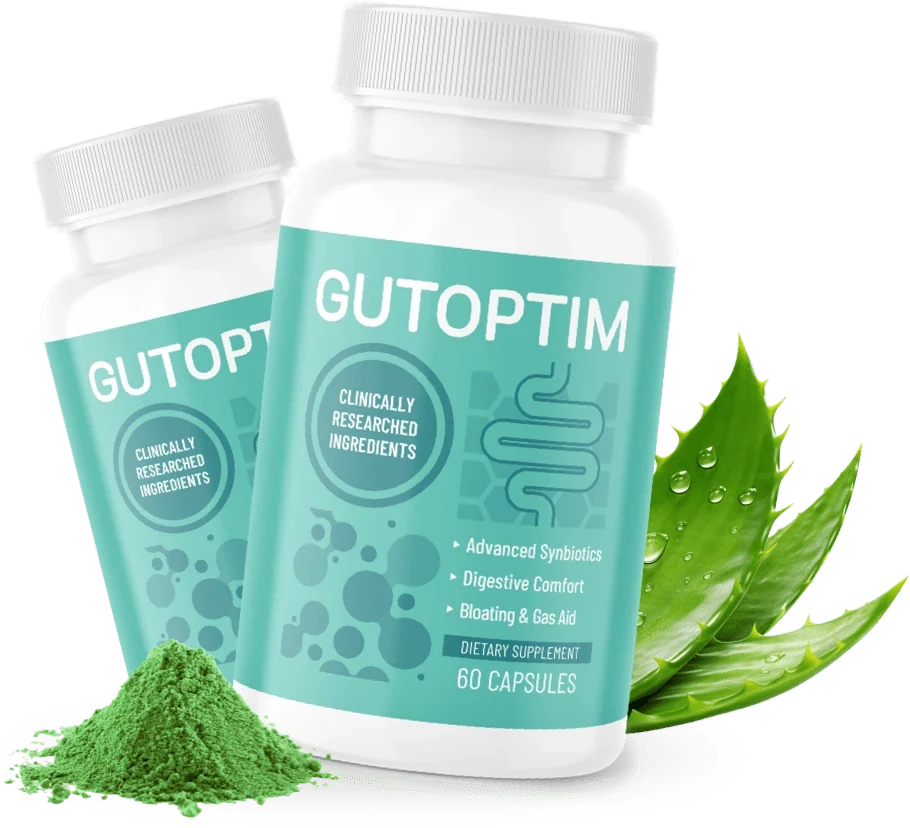
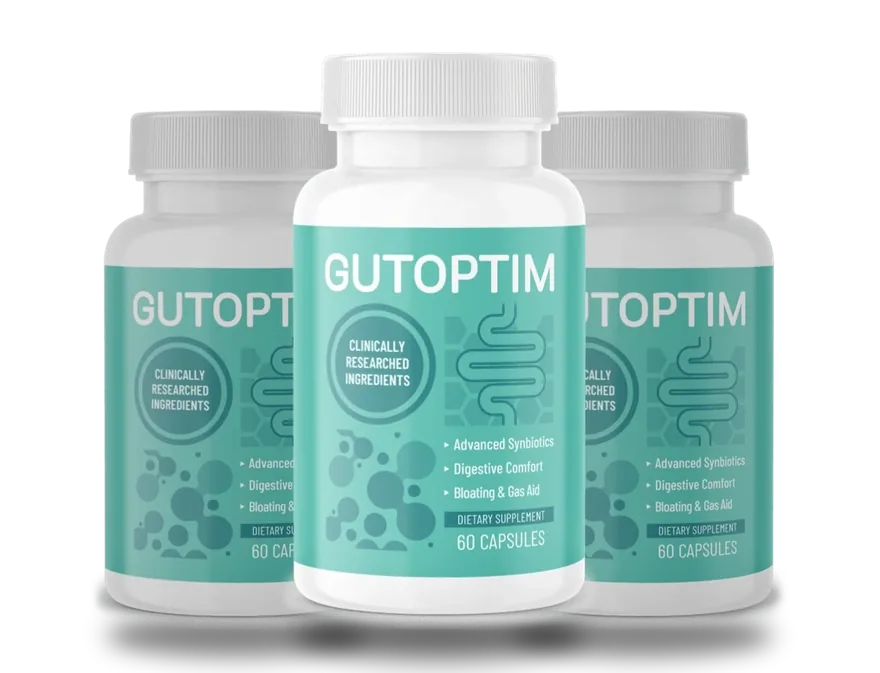
GutOptim is one example of such a supplement. It is a capsule: two a day with a meal, with at least a full glass of liquid, 60 to a bottle. The front says Advanced Synbiotics, Digestive Comfort and Bloating & Gas Aid. The panel prints a 1.5 g blend for the serving and no amount for any single ingredient. No trial of the finished capsule is published.
| Order | What to do | Why |
|---|---|---|
| First | Keep a simple diary for a week | It gives you a baseline to compare against |
| Second | Adjust food and fluid, one thing at a time | It is the cheapest change and the easiest to reverse |
| Third | See a doctor about any red-flag symptoms | A supplement is no stand-in for a diagnosis |
| Fourth | If you choose a capsule, read its label and cautions | Ingredient names are not the same as amounts |
| Fifth | Judge it near the end of 4 to 8 weeks | Buyers on record describe a wait of that length |
What are the safest gut optimization tips to start with?
The safest tips are the dull ones, because they carry the least risk. Keep a diary. Drink water. Eat regular meals. Walk. Change one thing at a time. Talk to your doctor or pharmacist before you add a supplement if you take a medicine or have a condition.
The riskiest tips are the dramatic ones: cleanses, crash diets, or anything that promises to reset your gut in days. The FTC lists common health scams, and a promise of a fast reset is a standard feature of them. Be wary, and be kind to yourself.
Who should not follow a plan like this without a doctor?
Anyone with a diagnosed digestive condition, anyone who is pregnant or nursing, anyone on regular medicines, and anyone with ongoing pain, blood in the stool, or a sudden change in bowel habit. The GutOptim label excludes anyone under 18 and anyone pregnant or nursing, and asks you to consult a physician if you take a medication or have a medical condition.
The panel also prints Contains Tree Nuts (Walnuts). So if you have a tree nut allergy, GutOptim is ruled out, whatever else is in your plan.
What if I want to add GutOptim to my plan?
Order it through the official site only. The price is $69 for one bottle, $59 each for three or $49 each for six, with free US shipping on every pack. Payment is taken once. The guarantee is 60 days from purchase.
If you try it, start the diary first and begin the capsules on a quiet week. That gives the first weeks a fair read. Decide near the end of 4 to 8 weeks, and before day 60 if you might want your money back.
Frequently asked questions
What is a gut optimization plan?
It is a set of everyday choices aimed at digestive comfort, such as food, fluid, meals and movement, tracked over weeks. It has no official definition.
What is a gut optimization diet?
This website prescribes no diet. Public health pages cover eating for bowel health in general terms: foods with fibre, enough fluid and regular meals. Ask your doctor about your own case.
Do gut optimization supplements help?
They may suit some people, but no trial of the finished GutOptim capsule is published and no ingredient amounts are printed. Treat a capsule as an optional extra to test.
Is GutOptim the same as gut optimizer or gut optimum products?
Not necessarily. GutOptim is one word and is a capsule sold through its own website. Products with similar names are not covered here.
What are the safest gut optimization tips?
Keep a diary, drink water, eat regular meals, walk, and change one thing at a time. Ask a professional before adding a supplement if you take medicine.
When should I see a doctor instead?
For ongoing pain, blood in the stool, a sudden change in bowel habit, or any diagnosed condition. A supplement is not a substitute for a diagnosis.
Our view
A plan beats a pill. The steady parts, such as notes, fluids, meals and a calm pace, are cheap, and they work on the one thing a supplement cannot touch: your own routine.
We sell GutOptim and earn on orders, so you should expect us to say a capsule has a place. We think it can, but a small one, and only after the basics. If you have a condition or take medicine, start with your doctor.
GutOptim is a dietary supplement. It is not a drug, and it is not FDA approved. No supplement is. These statements have not been evaluated by the Food and Drug Administration. This product is not intended to diagnose, treat, cure or prevent any disease. Talk to your doctor or pharmacist about any medical question.
Add it as an experiment, not a rescue.
The order page shows the live price, free US shipping and the 60-day window before payment. You can start the diary first and decide later.
See today’s price and guaranteeThis website earns money on orders placed through it.
Sources cited in this article
- National Institute of Diabetes and Digestive and Kidney Diseases. Eating, Diet, & Nutrition for Constipation. https://www.niddk.nih.gov/health-information/digestive-diseases/constipation/eating-diet-nutrition
- National Institute on Aging. Concerned About Constipation? https://www.nia.nih.gov/health/constipation/concerned-about-constipation
- Federal Trade Commission, Consumer Advice. Common Health Scams. https://consumer.ftc.gov/articles/common-health-scams
- NIH Office of Dietary Supplements. Dietary Supplements: What You Need to Know. https://ods.od.nih.gov/factsheets/WYNTK-Consumer/
- U.S. Food and Drug Administration. Questions and Answers on Dietary Supplements. https://www.fda.gov/food/information-consumers-using-dietary-supplements/questions-and-answers-dietary-supplements
Last updated