GutOptim Official Website › Blog › Ingredients
Bentonite Clay In A Gut Supplement: What It Is, What To Ask
Bentonite is a mined clay, mostly montmorillonite, sold in supplements as an adsorbent: something that binds other substances rather than being absorbed itself. It is the second name printed on the GutOptim panel. The useful questions about a swallowed clay are about sourcing and batch testing rather than about how much of it you take.
- Bentonite is mined rock, not a plant and not a bacterium.
- No trial tests a swallowed clay for a digestive outcome.
- The published literature on clays sold to be swallowed is mostly about heavy metals.
- Two FDA advisories concern named products, and one of them is still live only in Spanish.
- Batch testing is the answer to the metals question, and it is a document rather than an argument.
What bentonite clay is, and where it comes from
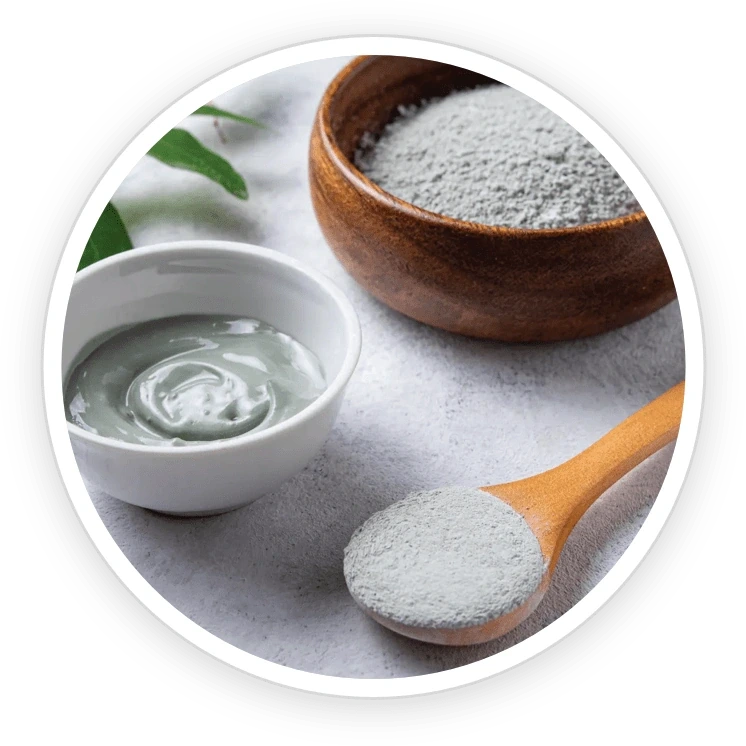
Bentonite is a rock. It forms where volcanic ash weathers, it is mostly a mineral called montmorillonite, and it is dug out of the ground and milled into a powder. Chemically it is an aluminium phyllosilicate, which is a layered structure with a large surface area and an electrical charge that other molecules stick to.
That makes it unlike everything else on this panel. Four of the ten names are plant fibres, one is a bacterium, one is dried fruit. Bentonite is mined mineral matter, and it is printed second in the blend, which places it high in the order by weight.
The same clay is used industrially in drilling mud and in wine making. That does not make it unsuitable for a supplement, and it does not make it suitable either. It does mean the word natural is doing very little work here.
What an adsorbent claim does and does not cover
Clay supplements are usually sold on adsorption. The claim is that the charged mineral surface binds things in the gut, and that whatever is bound leaves with the clay rather than being taken up. In a laboratory beaker that behaviour is real and measurable.
The step that is missing is the one that matters. Binding something in a beaker does not establish that swallowing the clay changes anything a person would notice, and there is no trial of a swallowed clay for a digestive outcome to put in that gap.
The NIH Office of Dietary Supplements has the sentence for an ingredient in this position: many supplements need more study to determine whether they have value. That is the accurate description here, and it is more useful than a laboratory paper dressed up as a result.
The standard an advertiser is held to is a separate matter again. The FTC’s health products compliance guidance says health-benefit and safety claims require substantiation in the form of competent and reliable scientific evidence. That applies to every seller in this category, this desk included, and it is the reason the claims on this website stay where the label’s own claims are.
Why a binding claim cuts both ways
Adsorption is a physical property rather than a selective one. A charged mineral surface does not read labels, and nothing on this panel claims that it tells apart the things it might meet in a gut. That is worth holding on to for one practical reason. It makes the label’s own line about medication the useful sentence on the bottle rather than a formality, and it is the sort of thing a prescriber can settle in a minute.
It also explains why a clay cannot be measured against a research amount the way psyllium can. There is no published trial amount to compare a serving with, so the dose question that runs through the how it works page does not arise here at all. What is left is provenance, and provenance is a paperwork question.
Lead, arsenic and the clay literature
The research that does exist on clays sold to be swallowed is mostly about what else is in them. Clay comes from the ground, and so do lead and arsenic.
A 2013 survey published in Food Additives and Contaminants assayed 63 clays sold for oral use on one national market. Lead reached 99.7 mg/kg and arsenic reached 45.1 mg/kg. Of the 27 products the authors classed as health clays, two would take a user past the toxicological limit for lead at the recommended intake, and 11 would take a user past the limit for inorganic arsenic. The authors concluded that use of these clays should be discouraged, and named pregnancy in particular.
| What the survey measured | What it found |
|---|---|
| Clays assayed | 63 products sold for oral use |
| Highest lead level | 99.7 mg/kg |
| Highest arsenic level | 45.1 mg/kg |
| Past the lead limit at the recommended intake | 2 of 27 health clays |
| Past the inorganic arsenic limit | 11 of 27 health clays |
| The authors’ conclusion | Use should be discouraged, especially during pregnancy |
A survey of other products on another market. It is the reason to ask for batch paperwork on any clay supplement, and it is not a measurement of the clay in this bottle.
That last line is the whole of how this survey should be read. It tested other people’s products, several years ago, in another country. It establishes that swallowed clay is a category where contamination happens often enough to be worth a laboratory sweep, and it establishes nothing about any particular jar.
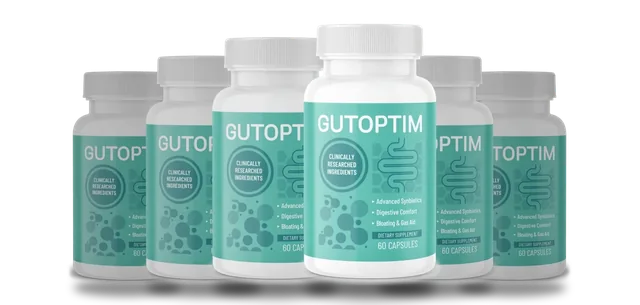
Order GutOptim on the official website
Ten names on the printed panel, three claim lines on the front of the bottle, and 60 days to change your mind. Free United States shipping on every pack.
Order GutOptimThe FDA advisories, and exactly what they cover
Two FDA advisories concern bentonite clay products, and the detail matters more than the headline. Both are about a named product. Neither is a statement about bentonite clay wherever it appears.
The advisory that is still live warns consumers away from Alikay Naturals “Bentonite Me Baby” over elevated lead levels and the risk of lead poisoning. The English-language version of that page no longer resolves at FDA, and the Spanish-language version does, so the Spanish page is what is cited here and it is labelled as such. A second advisory, on a product called Best Bentonite Clay, has gone from the site entirely.
A dead page is not a withdrawn finding, and it is not evidence either. What the live advisory supports is narrow: a regulator has warned consumers off one bentonite product because of lead. It does not say that any other clay is contaminated, or that any is clean.
Two things are easy to confuse here. An advisory about a named product is a finding about that product. A survey of 63 clays is a finding about a category. Neither is a measurement of the clay in a different bottle, and only a certificate of analysis for a specific lot can be that.
The two questions a clay ingredient should answer
Because there is no dose to compare against a trial, the questions that remain are about provenance and testing. Both are answerable, and both are answered with documents rather than adjectives.
- Has this lot been tested for heavy metals, and can I see the result? A certificate of analysis names a lot, a laboratory and a set of results. The batch verification page explains what this desk holds and what it does not.
- Where does the clay come from, and who mills it? A panel prints names, not sources. Sourcing is a question for the manufacturer, and a manufacturer that answers it is telling you something about itself.
| The question | What a real answer looks like | What is not an answer |
|---|---|---|
| Has this lot been tested for heavy metals? | A certificate naming the lot, the laboratory, the method and a measured value against a stated limit. | A seal, a registration number, or the word purity. |
| Where was the clay mined and milled? | A named source and a named processor, given by the manufacturer on request. | A country of packing, which describes where the capsules were filled. |
| How much clay is in a serving? | Nothing, for any brand. No published human trial gives a swallowed clay amount to compare a serving with. | A bigger printed number, which would answer a question nobody can interpret. |
Two of the three are answerable with a document. The third is the one that separates a clay from a fibre on the same panel.
Seals do not answer either question. The FDA is explicit that mere registration of an establishment does not denote approval of the establishment or of a product, nor that a product may legally be marketed. The agency also has no authority to approve a dietary supplement before it is sold. A Good Manufacturing Practice seal describes an audited process rather than a batch result, and the testing and quality page takes all ten seals on this artwork apart one by one.
What a certificate of analysis can actually prove
A certificate of analysis is where the metals question ends. It covers the material that was tested and nothing else, which is why one for a single lot says nothing about the next one.
This desk holds a lot code and a certificate reference for this product, and both are filing references rather than laboratory results. The batch verification page says exactly that, prints both codes, and gives the route for asking the manufacturer for the document itself.
- A lot code identifies a production run. It lets a manufacturer find the batch and it lets a buyer quote it. On its own it proves nothing about content.
- A certificate reference is a pointer to a document. The document is the evidence, not the reference number printed beside it.
- A test result names an analyte, a method, a limit and a measured value. That is the only one of the four that answers the question this article is about.
Who should be most careful with a swallowed clay
The label draws its own lines, and they are narrower than the seller’s page suggests.
- Anyone pregnant or nursing. The printed caution excludes both, and the clay survey’s authors named pregnancy specifically.
- Anyone under 18. The same caution excludes them.
- Anyone taking a medication or living with a medical condition. The label asks for a conversation with a physician before the first capsule, and a binding agent is a sensible thing to raise in it.
- Anyone who has difficulty swallowing. That is the label’s own notice, and it is about the fibre rather than the clay. The fibre article covers it.
Pregnancy is the one line here that is not a judgement call. The printed label excludes anyone pregnant or nursing, and the authors of the clay survey named pregnancy specifically when they wrote that use of these clays should be discouraged. Two independent statements landing in the same place is worth raising with a midwife or clinician rather than settling alone.
The seller’s page also states that “all of the ingredients have been proven to be safe in clinical trials”. No trial of GutOptim has been published, and the panel prints no amount for any of the ten names, so there is nothing to compare a trial dose against. For the clay in particular there is no trial to point at at all.
Sources cited in this article
- Reeuwijk NM, Klerx WN, Kooijman M, Hoogenboom LA, Rietjens IM, Martena MJ. Levels of lead, arsenic, mercury and cadmium in clays for oral use on the Dutch market and estimation of associated risks. Food Addit Contam Part A Chem Anal Control Expo Risk Assess. 2013;30(9):1535-45. https://pubmed.ncbi.nlm.nih.gov/23862762/
- U.S. Food and Drug Administration. La FDA advierte a los consumidores sobre los riesgos que la arcilla de bentonita de Alikay Naturals, Bentonite Me Baby, conlleva para la salud. (FDA drug safety advisory; the English-language version of this page no longer resolves, so the Spanish version is cited.) https://www.fda.gov/drugs/drug-safety-and-availability/la-fda-advierte-los-consumidores-sobre-los-riesgos-que-la-arcilla-de-bentonita-de-alikay-naturals
- NIH Office of Dietary Supplements. Dietary Supplements: What You Need to Know. https://ods.od.nih.gov/factsheets/WYNTK-Consumer/
- U.S. Food and Drug Administration. Questions and Answers on Dietary Supplements. https://www.fda.gov/food/information-consumers-using-dietary-supplements/questions-and-answers-dietary-supplements
- U.S. Food and Drug Administration. Is It Really 'FDA Approved'? https://www.fda.gov/consumers/consumer-updates/it-really-fda-approved
- Federal Trade Commission. Health Products Compliance Guidance. https://www.ftc.gov/business-guidance/resources/health-products-compliance-guidance